



When I sat down with Ali Valdor, what struck me wasn’t the technology or even the assessment workflow itself. It was the level of thought behind the learning design.

Managing students across multiple placement sites as they develop professional skills presents a challenge familiar to many Work Integrated Learning (WIL) educators. Students need meaningful feedback, supervisors need a process that fits within busy workplace environments, and universities need confidence that learners are developing the professional capabilities required for practice.
Throughout our conversation, Ali kept returning to the same question: how do you create a placement experience that supports all three groups while helping students become reflective, capable professionals?
The answer is a carefully designed PebblePad workbook that brings together self-reflection, supervisor feedback, and evidence of learning across the placement journey.
Designing for different audiences
Ali is successfully navigating the complexity that is WIL.
With 48 students across 30 to 40 sites and supervisors, each with their own expectations, language and workplace rhythms, and the university needing confidence that every student is developing the minimum standards required to enter the profession, the assessment design has to work for multiple stakeholders.
The solution has been to design the assessment experience with three audiences in mind: students, supervisors and the university. In doing this, the content is aligned but the experience is not one-size-fits-all. Ali adapts the language, prompts and workflow so each participant can see what they need to do, why it matters and how their contribution supports the student’s development.
In practice, this means:
- For students: expectations are clear, feedback is transparent, and they can practise evaluating themselves against professional standards.
- For supervisors: the process is straightforward, their feedback is designed to promote growth, and their observations carry forward into the next placement.
- For the teaching team and university: progress is easier to monitor, support can be offered early, and evidence of capability is gathered consistently across placement sites.
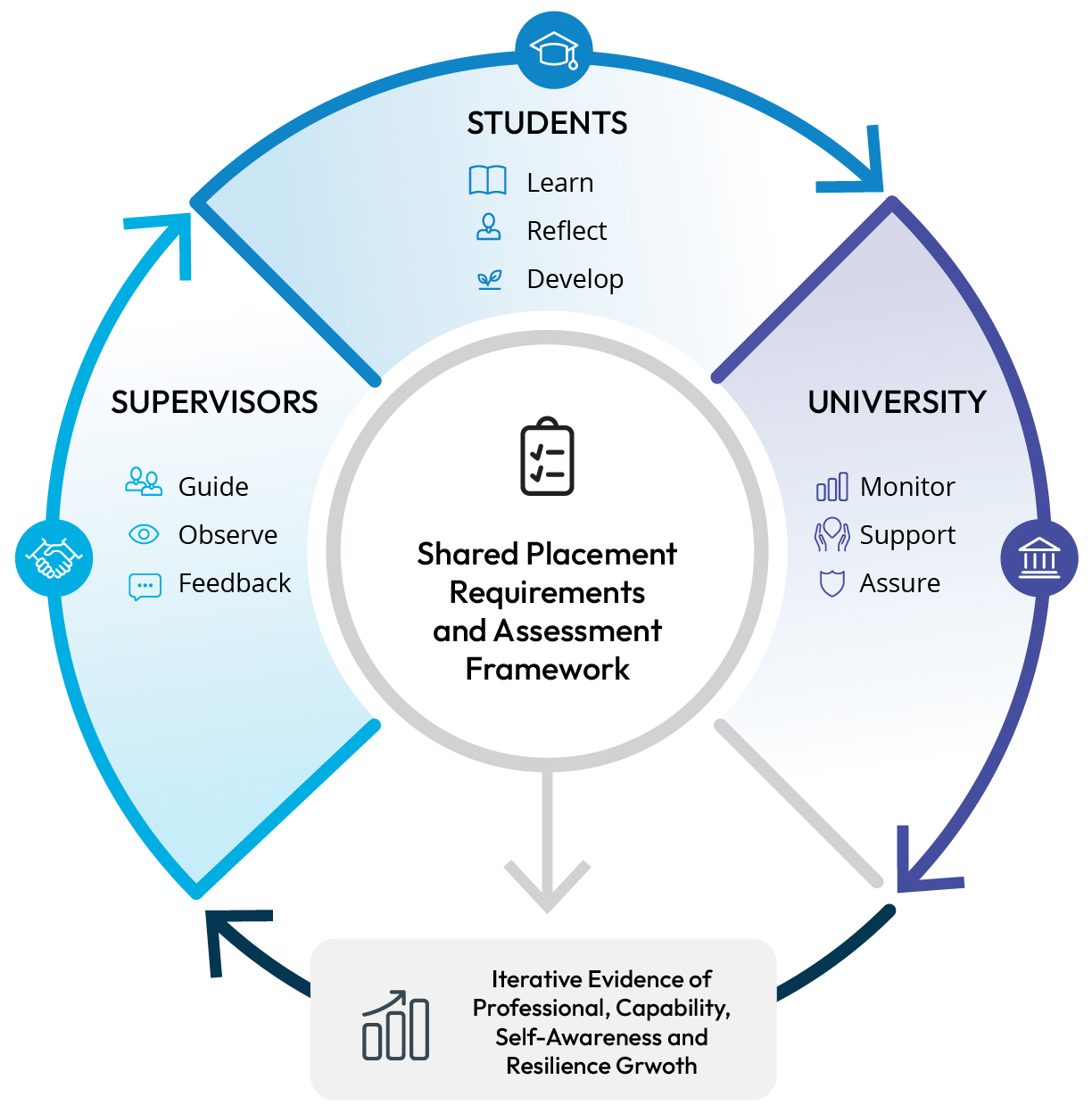
As our conversation continued, it became clear that what appears to be a relatively simple workbook is actually the result of careful consideration about how students learn in workplace settings, how supervisors engage with assessment, and how universities maintain confidence in professional capability development.
Making progress visible
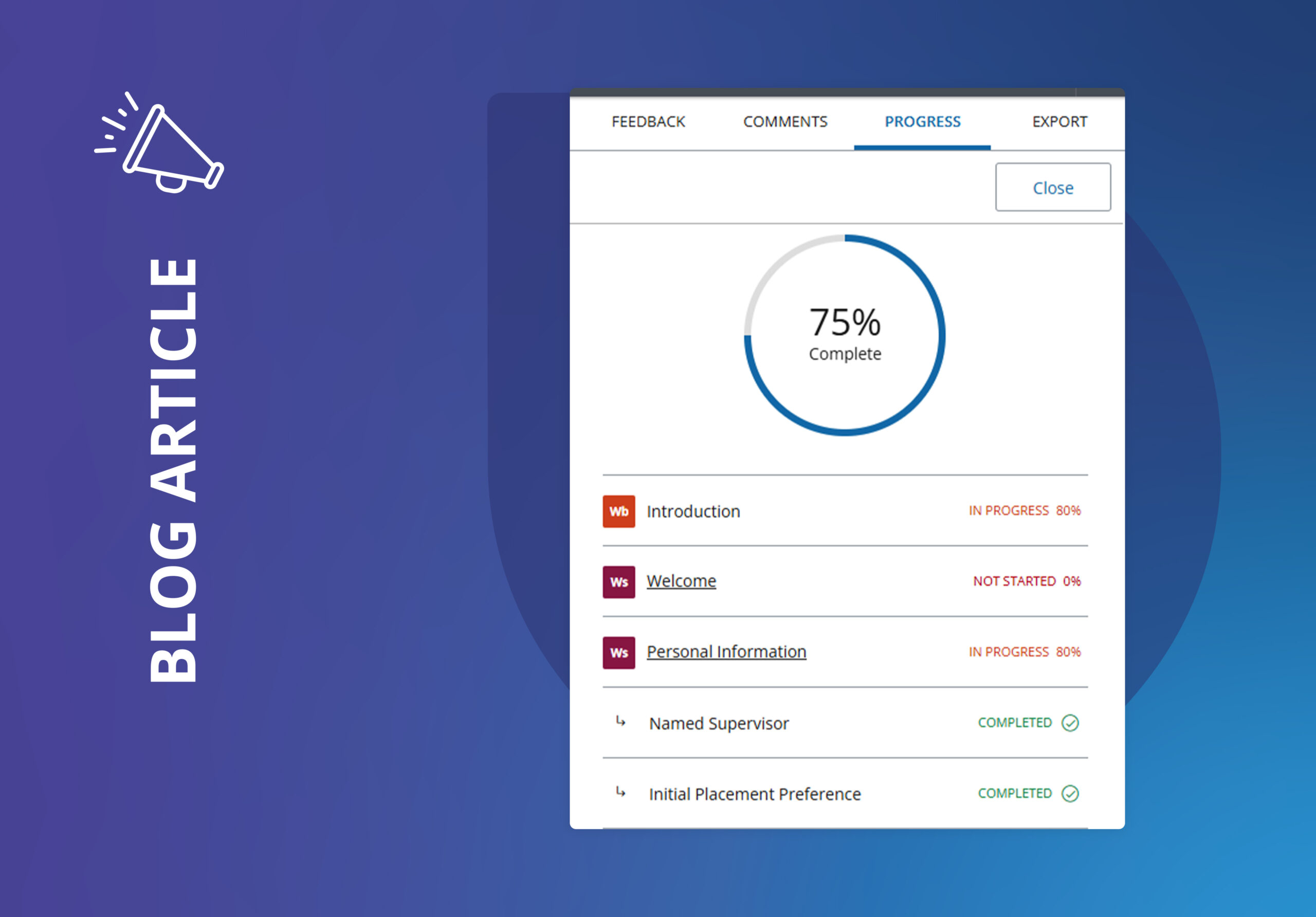
At the heart of the approach is ePortfolio pedagogy. Students continuously document, reflect on and make sense of their experiences over time. Ali has built a structured PebblePad workbook that grows with the student rather than treating each task as a separate submission. The workbook holds self-assessments, intermediate conversations, supervisor feedback and verification in one place, creating a richer picture of development throughout the placement experience.
Students begin by rating themselves against the Exercise and Sports Science Australia (ESSA) professional attributes using language that is deliberately clear.
Students then justify those ratings in their own words. Ali intentionally avoids word limits because the goal is not to reward lengthy responses. Instead, the process is designed to create an opening for genuine reflection and dialogue.
What stood out during our discussion was that these conversations are not left to chance. They are intentionally designed into the learning experience.
The intermediate assessment transforms written reflection into a live feedback conversation. Ali visits the placement site, sits with the student and supervisor, and uses the same professional domains to explore progress.
Students hear how their self-perception aligns with, or differs from, the supervisor’s perspective. When there is a gap, it becomes a coaching opportunity rather than a surprise at the end of placement.
Students practise listening, asking clarifying questions and turning feedback into action with a focus on growth.
By the final assessment, the supervisor takes the lead in the conversation. At this stage, both student and supervisor have developed a shared understanding of expectations and professional capability. Students are responsible for initiating the process, and many supervisors choose to complete the assessment alongside the student.
Because the assessment uses the same professional domains, and a consistent rating and feedback structure throughout, supervisors can focus on the quality of the conversation rather than learning a new process.
“I’ve designed it to be a lot more streamlined. Supervisors know what they have to do and why they have to do it. They have buy in.”
Alongside the assessment process sits the ROSE form, or Record of Student Engagement, which provides a formal summary of the student’s placement experience. Importantly, it is informed by repeated cycles of self-assessment, feedback, reflection and action, rather than a single evaluation point.
Building continuity across placements
One of the most interesting aspects of Ali’s design is the way it supports continuity.
Once the final assessment is complete and verified, a new set of workbook pages is released for the next placement. Future supervisors can review previous feedback, understand areas of focus and build on the student’s existing progress.
The student does not start again from scratch. Instead, each placement becomes part of a broader professional learning journey.
By this point, students have practised articulating evidence, reflecting on experiences, receiving feedback and identifying how their learning demonstrates readiness for practice. This reinforces the idea that professional reflection is not a one-off assessment task but an ongoing habit of listening, responding and improving.
Reflection, feedback and safe dialogue
It is clear that this assessment has been designed to promote dialogic feedback. With multiple opportunities to reflect and listen, students are not left to guess what “good” looks like and supervisors are not asked to provide feedback in a vacuum. The rubric, prompts and shared workbook create a common language for discussing performance, confidence and readiness for practice.
The PebblePad workbook supports this by keeping evidence, reflections and feedback visible over time:
- Students can revisit earlier reflections, recognise patterns and carry forward development goals into future placements.
- Supervisor handovers between placement experiences become more transparent and productive.
Feedback becomes something students actively engage with during their learning experiences rather than something they passively receive at the end.
Flexible and future ready
The workbook continues to evolve through ongoing conversations with students, supervisors and placement providers. Ali regularly refines prompts and guidance based on assessment discussions, workplace expectations and emerging industry needs.
Adding language drawn from position descriptions or feedback from placement sites helps keep the experience authentic and relevant. In many ways, the workbook itself keeps listening.
The result is an assessment experience that not only supports university and accreditation requirements but also feels meaningful to students and recognisable to the workplace. It is a strong example of PebblePad being used not simply to collect evidence, but to connect learning through reflection, feedback and professional development.
Lessons learnt: upfront investment pays dividends
Ali is clear that this type of design takes time. Creating an assessment experience that works for students, supervisors and the university requires careful planning, clear prompts and a process that feels meaningful in real-world placement settings.
It also needs to remain flexible enough to evolve through conversations with students, placement providers and the profession itself. However, that upfront investment delivers significant benefits. A thoughtfully designed assessment reduces ambiguity, supports more consistent feedback and creates more equitable opportunities for students to be seen, heard and supported throughout their placement experience.
“I know it’s working because I know the students are having a great time. When you do that intermediate assessment and you get to see them actually enjoying their placement, you know it’s working.”
For me, the key lesson from our conversation was not simply that feedback matters. It was that meaningful feedback practice can be intentionally designed into work integrated learning and assessment.
By creating a shared space for reflection, dialogue and evidence of learning, Ali has developed an approach that helps students build the confidence, self-reflection and feedback skills they will carry into professional practice long after placement has ended.