




Discover how nursing educators are using PebblePad to streamline onboarding, deepen curriculum integration, and build clinical confidence through reflection and feedback.
The webinar, From Classroom to Clinical Confidence: Preparing Future-Ready Nurses, kicked off PebblePad’s new Clinical Confidence series with a focus on how ePortfolios can support students in developing clinical competence in the US.
Hosted by Gail Ring, Director of Service and Learning Partnerships for PebblePad North America, the session featured Susan Bonham, Advisor in Educational Technology at Langara College, and Kelly Wheatley, Instructional Designer at The Ohio State University. Although the webinar’s examples centered on nursing, Ring opened the session by highlighting how the benefits of PebblePad apply broadly: whether in nursing or education, the platform helps students connect learning to practice in meaningful ways.
For the main presentation, Bonham and Wheatley shared how they’ve used PebblePad to enhance reflection, streamline assessment, and support students in building confidence as they transition from classroom learning to clinical environments. Here are the highlights:
Strategies for onboarding faculty
Susan Bonham has led the rollout of PebblePad across Langara’s nursing program, onboarding more than 120 instructors with a refreshingly pragmatic approach. Her success, she explained, comes down to three key strategies: visual demonstration, focused training, and accessible support:
- Visual demos: Rather than relying on abstract explanations, Bonham builds full assignment demos using real student submissions. This “show, don’t just tell” method helps instructors immediately grasp how PebblePad can enhance their teaching. It’s a strategy that’s proven effective in overcoming initial hesitation as well as sparking curiosity.
- Training: Training sessions are also deliberately short—“60 minutes or less,” she said—because clinical instructors often have limited time. These sessions focus only on the functionality faculty will use right away, making the learning active and immediately applicable. It’s “what they need to know,” Bonham added, underscoring the importance of relevance and clarity.
- Support: Support doesn’t end after training. Recognizing that many instructors work evenings and weekends, Bonham created a suite of online resources—videos, handouts, and screenshots—that faculty can access anytime. “Everything we’ve gone over with them is available online,” she said, “[and] they can also come back and reach out to us at any time.”
The results speak for themselves. “I’ve only ever had two [instructors] struggle,” Bonham noted. “[And] they were good to go after a one-on-one meeting with them.” Her approach has made onboarding not just manageable, but genuinely empowering.
!["[Out of 120,] I’ve only ever had two [instructors] struggle … [and] they were good to go after a one-on-one meeting with them." Susan Bonham, Langara College](https://pebblepad.com/wp-content/uploads/2025/10/Kingston-University-Use-Case-PebbleBash-2-300x130.png)
Starting small vs. going deep
A recurring theme in the webinar was whether institutions should start small with PebblePad or aim for deeper integration from the outset. Both Bonham and Wheatley leaned toward the latter, arguing that meaningful impact comes from embedding the platform into the fabric of the curriculum.
At Ohio State, Wheatley explained that PebblePad wasn’t introduced to fix a broken process, but to enhance existing assignments. “Just because you have a new tool doesn’t necessarily mean that you should use it,” she said. “It had to be a thoughtful process.” That mindset led to a redesign of a clinical case summary assignment, which had previously involved multiple disconnected uploads.
Creating accessibility
With PebblePad, the assignment was transformed into a structured workbook with clear tabs and embedded reflections. “We didn’t change anything [about the objectives],” Wheatley explained, but it became so much easier to digest—from both the student and instructor standpoint.
Bonham echoed this experience, describing how long, scroll-heavy Word documents were replaced with interactive workbooks that were easier to navigate and assess. “[It] is just more accessible, it’s more readable, and it’s easier for not only the students, but for the instructors to see what they’ve done and what feedback they could give to guide them,” she said, highlighting how design improvements can directly support better learning and teaching.
Both presenters agreed that deeper integration unlocks the full value of PebblePad—not just as a submission tool, but as a platform for reflection, feedback, and curriculum alignment.
![“Just because you have a new tool doesn’t necessarily mean that you should use it … It [has] to be a thoughtful process.” Kelly Wheatley, Ohio State](https://pebblepad.com/wp-content/uploads/2025/10/Kingston-University-Use-Case-PebbleBash-3-300x130.png)
Feedback that builds confidence
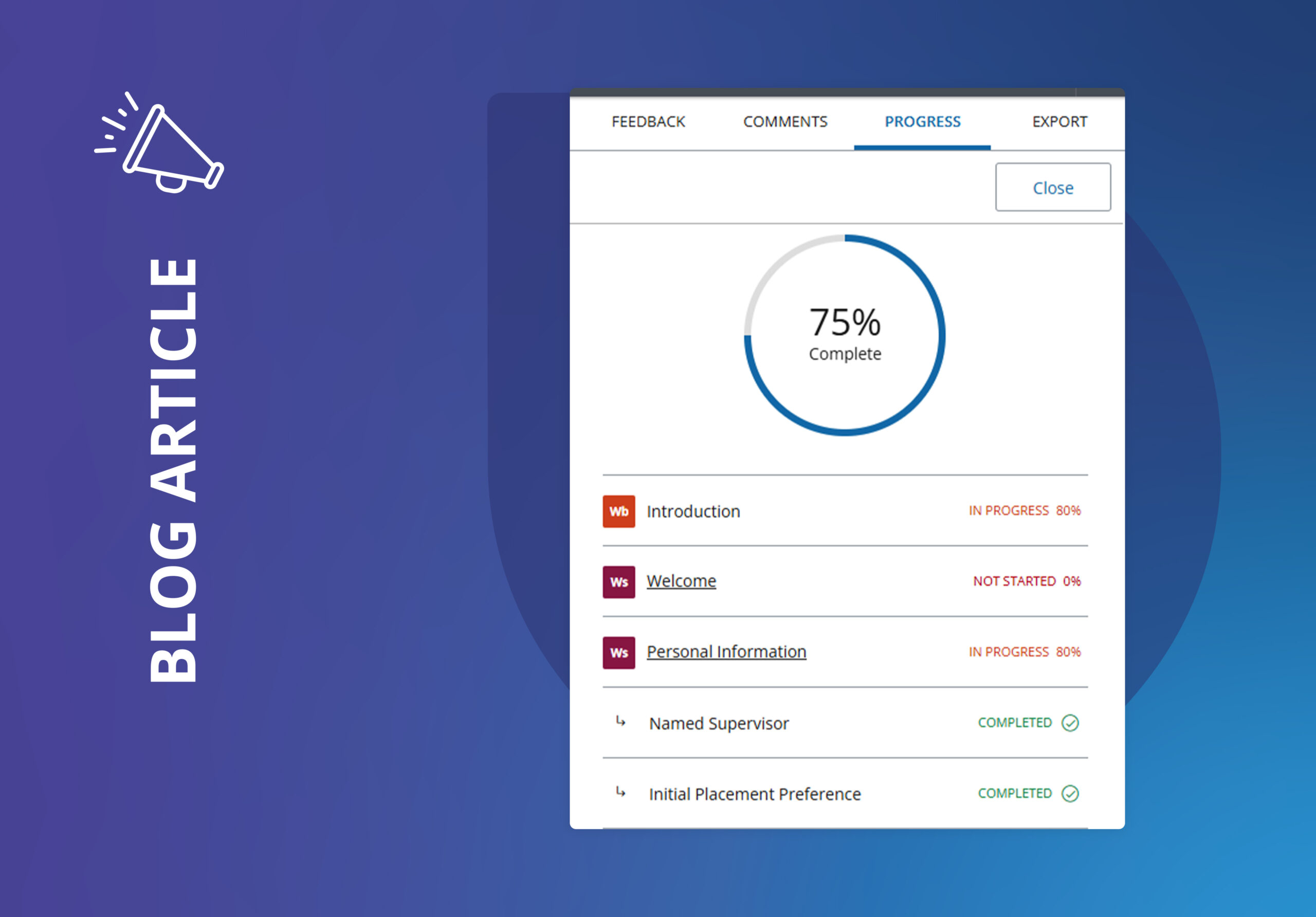
One of PebblePad’s strengths is its ability to support formative feedback and track student progress in real time. Bonham highlighted how instructors can see when students last worked on an assignment, making it easier to identify those who may need support.
The platform also enables dialogic feedback, where instructors and students can engage in a back-and-forth conversation directly within the workbook. “It’s iterative,” Bonham explained. “I can put a comment, and the student can reply … That is something our LMS doesn’t offer.”
Wheatley noted that structured workbooks help reduce anxiety during clinical reporting. Students use their workbook as a guide, which helps them stay focused and confident. One student told her that the visual layout helped her remember key concepts, saying she could “literally just picture these tabs in her head and be reminded of which concepts to cover … what came next.”
This kind of scaffolding not only improves performance but also builds habits that carry into professional practice.
Supporting CBL and accreditation
At Ohio State, PebblePad is also being used to support competency-based learning. Wheatley described how a programmatic workbook maps course-level objectives to broader program outcomes, helping students track their development across the curriculum.
“By the time this first cohort in our new program graduates,” Wheatley said, “we’ll have this comprehensive centralized record of student learning across [the whole] program. And we’re ready to share it with accreditors.”
This alignment makes it easier for faculty to design meaningful assessments and for students to understand how their work connects to professional standards. It also provides a clear narrative of learning progression—something increasingly important in accreditation and quality assurance contexts.
What students and faculty say
Feedback from both students and faculty has been overwhelmingly positive. Wheatley shared that instructors found the new assignment formats energizing and more insightful. One faculty member said it was “refreshing to see [students’] creative spirit,” while another noted that PebblePad was helping build continuous reflection across the program.
Students also responded well. One said the workbook helped them “digest the material and understand it better,” while another shared that they enjoyed building their ePortfolio and planned to continue adding to it throughout their education to share with future employers.
Bonham acknowledged that some students were initially unsure about instructors seeing work in progress, but these concerns were rare and easily addressed. “It was actually only one or two per eighty students that would actually have that that concern,” she said. However, once the benefits were explained, the concerns faded away.
Reflection as a professional habit
Both presenters emphasized the long-term value of reflection. Wheatley described it as a confidence-building tool that helps students become more self-aware and prepared for clinical practice.
Bonham shared a powerful story about a paramedic who continued using PebblePad after graduation to manage stress and improve mental health. “He [started] doing a reflection at the end of every shift,” she said, “[and] his mental health hugely improved.”
With free alumni accounts available, students can continue using PebblePad as they transition into professional roles, supporting lifelong learning and resilience.
Final thoughts
As PebblePad’s Gail Ring wrapped up the session, she reflected on the power of ePortfolios to support deeper learning. “That opportunity to rehearse and practice and think about what you know and how you know it is just invaluable,” she said.
Ultimately, what the webinar revealed is—whether you’re in nursing, education, or any other discipline—PebblePad offers a flexible, student-centered platform that supports reflection, feedback, and growth. And as Bonham and Wheatley demonstrated, thoughtful implementation makes all the difference.