




An InstrucuteCon marathon
I’m a self-confessed ed-tech conference-geek. I love the buzz, the excitement, the conversations with educators from across the world, the snacks! So ‘virtual’ has less snacks and swag, and less personal interaction – but that’s the world we live in now and immersing yourself in it is the best way to learn – on-the-job, like millions of students and teachers did last year.
Thursday October 7th was marked in our teams’ calendars across each of our territories, in readiness for attending InstructureCon 21 as a very proud Gold Sponsor – what a great way to showcase our partnership with Instructure and the great PebblePad integration opportunities with Canvas LMS. Being an entirely virtual conference provided the opportunity to participate across the globe without needing an airline ticket or hotel booking, and for myself, the day dawned three times as I joined in each of the partner sessions in Australasia, EMEA and North America. I took on this InstructureCon marathon because I was excited to speak with delegates in all 3 time zones and share what I love about PebblePad, at a conference chock full of passionate educators.
PebblePad and Canvas – a partnership built for success
One of the things people were curious about when we spoke with them during the conference was the value PebblePad’s Learning Journey Platform brings to universities already using a highly capable LMS like Canvas. The simple fact is that more and more universities are integrating Canvas and their digital ecosystems with PebblePad, and, in doing so, bolstering their institution-wide capacity for supporting their students’ unique learning journeys – at scale – and supporting learning in any context, both on and off-campus. Across the global HE community, PebblePad’s integration with Canvas is making the ambition of developing flexible, well-rounded graduates a reality.
A common ambition – supporting students in every step of their unique learning journeys
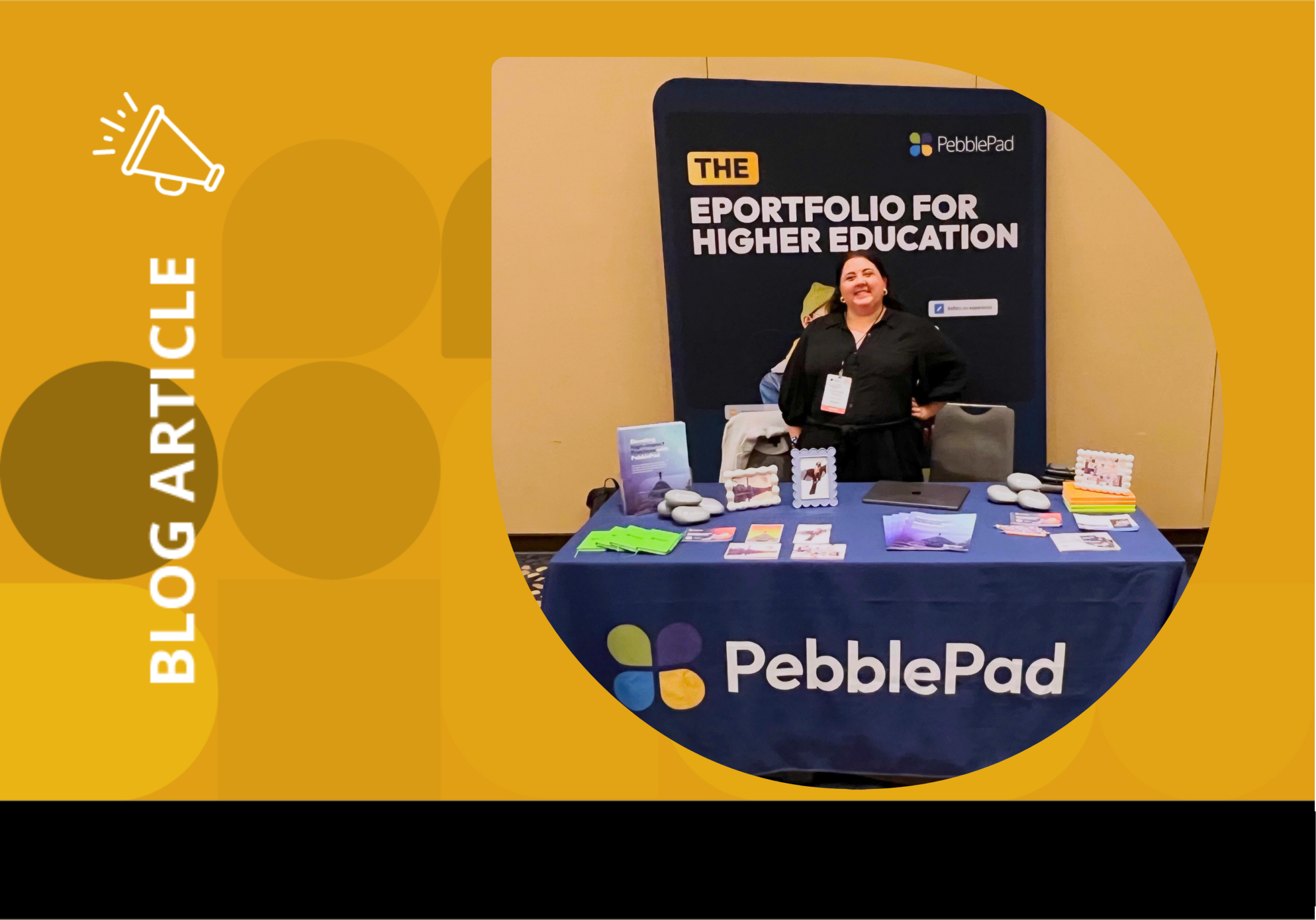
We had some terrific conversation with delegates who dropped into our virtual booth – some, existing members of the PebblePad community who stopped by to chat about what they are doing with the platform and ask about new enhancements on the horizon, and many others new to PebblePad who were keen to hear about what it is we do. Most often, they wanted to know about the integration with Canvas. Great tech has to “talk nicely with each other” and we are incredibly proud of the way we do this, making intuitive learning paths in Canvas integrate seamlessly with the PebblePad Learning Journey Platform.
Of course, talking about the integration led to deeper conversations about what makes PebblePad unique. In short, student-centred, experiential learning initiatives are notoriously difficult to support and assess, especially at scale. Even the best LMS platforms, typically designed with content delivery in mind, are not geared up for allowing the freedom, creativity and independence learners need to make the most of their diverse and individual learning journeys. In this respect, flexibility is essential. The flexibility and versatility of PebblePad to adapt to multiple use cases is seen even more clearly when you have multiple attendees asking multiple “can you do…”, “is it possible to…” kinds of questions and being able to say to them – “Yes, you can do that. Yes, it is possible.”
Reimagining and redefining eportfolio practice
I think the most interesting aspect of these conversations for me was how diverse people’s opinions were of what an ePortfolio should be and what it should do. Many in the HE community think of PebblePad as a portfolio platform, and for good reason. But PebblePad is, without question, more than just an eportfolio; PebblePad is a Learning Journey platform built by educators to support student-centred education at scale, and as such it supports a whole raft of teaching, learning and assessment ambitions. So one of the definite highlights – and a privilege – for us was the opportunity to hold a panel session with three PebblePad super-users discussing how PebblePad, Portland State University and the University of the Sunshine Coast are redefining eportfolio practice.
Traditional portfolio-like platforms tend to focus on output and showcasing achievement at the expense of helping learners reflect and capitalize on their experiences as they progress on their higher education journey.
PebblePad does both – enabling learners to plan, record, reflect on, make sense of, and curate evidence of their learning from induction through to graduation and beyond. From a capstone showcase presentation of a new graduate’s skills and achievements, through to task-based clinical placement workbooks or a resource to scaffold independent projects and research; or even a complete Flipped Classroom support package or an employability initiative that prompts learners to track their development as emerging professionals over the entire course of their learning journey – the possibilities truly are boundless.
It was a really interesting to experience a “follow-the-sun” conference, over more or less 24 hours. It didn’t seem such a great idea at 1am when the alarm went off, but as soon as our booth turned ‘live’ and we started chatting with everyone, the time flew by. I loved my 24 hour InstructureConAThon – I’m glad to be back operating in just one timezone, but I am already thinking about how to make next year even better.