



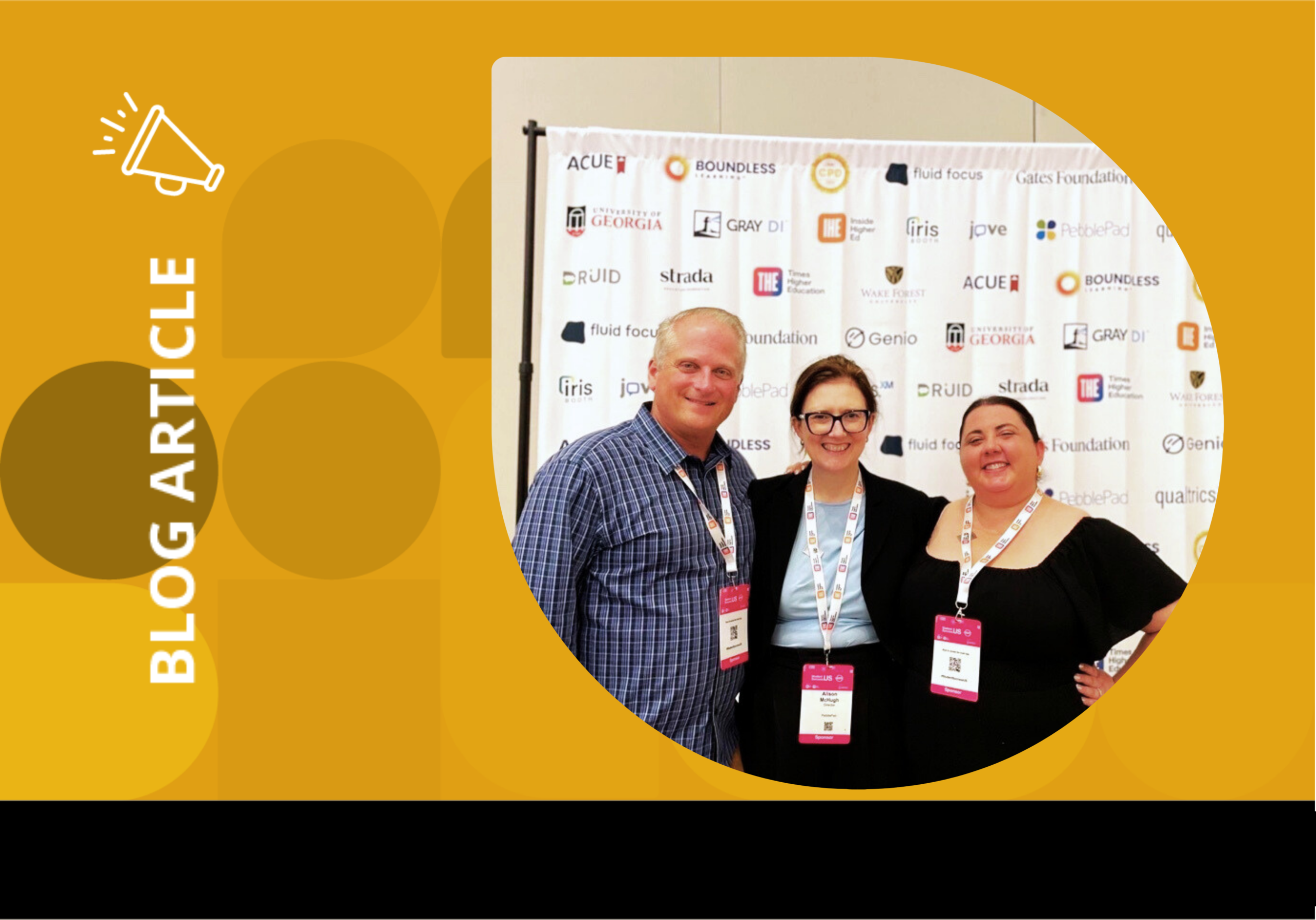
PebblePad’s Stephanie Vivirito offers her key insights from Times Higher Education/Inside Higher Ed’s Student Success US at the end of last year, a one-of-a-kind event that brings together leaders from institutions across the United States.
One thing we like to do at PebblePad is reflect. Not only is it a hallmark of what our platform does to support learners, but it’s also what we do as a company—as reflection helps us to make meaning of our experiences. So, as I reflect on the Student Success US event, I keep going back to the ‘why’ behind attending events like this.
For me, it’s all about the mission of higher education, and students are at the heart of it. And my biggest takeaway? While ‘Student Success’, as an idea, means different things to different people, the dedication to do right by students was the theme that brought everyone together at the event. But what does ‘doing right’ actually look like in the context of student success?
Why putting students first needs a campus-wide approach
Student success encompasses all areas of campus, but with a focus to ‘accelerate exceptional teaching and improve student well-being.’ Conference sessions reflected this, encompassing several important strands:
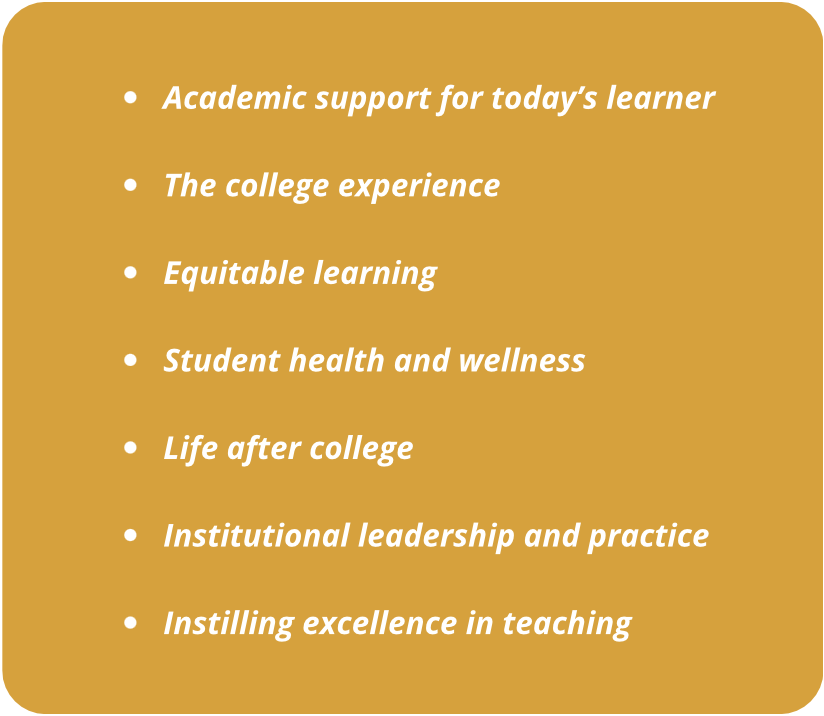
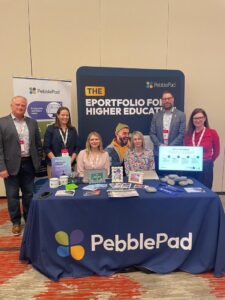
With a full PebblePad team in attendance, our presence in the exhibit hall and breakout session presentation offered many opportunities to contribute to the conversation about these themes and how they contribute to student success. Most importantly, we heard about the incredible work being done across US institutions to provide the right structures, processes, and approaches to address such crucial themes.
Sharing OSU’s story of scaffolding student success
“When students are getting ready to graduate, what are the stories that you hope they are going to be able to tell about their experiences?”. This was the question posed by Melissa Beers, Senior Director of General Education Bookends at Ohio State University, at the start of her presentation in partnership with PebblePad.
Aligning learning experiences with broader strategic goals is a major priority for higher education institutions, and PebblePad’s Student Success US session ‘Scaffolding Student Success: Scalable Strategies for Institutional Impact’ explored how intentional scaffolding and ePortfolio-based reflection supports this. Together with Gail Ring, Director of Service and Learning Partnerships and Head of Customer Success at PebblePad, Beers led a dynamic presentation about OSU’s Bookends framework.
Echoing the theme of delivering equitable learning systems, OSU’s Bookends supports students at key points in their education. This includes two courses that all students at the university are required to take—Launch and Reflection seminar courses—to ‘bookend’ their learning journey. Students are introduced to PebblePad’s ePortfolios in this program and are provided with structured explorations and steps to help them evaluate their personal and academic journeys.
“Education isn’t just about mastering content,” said Ring, “it is about identity, discovery, confidence, and connection-making.”
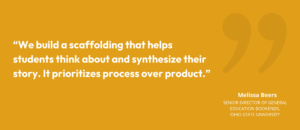
Laying the foundation for individual engagement and reflection, which are becoming increasingly important in the AI revolution, the Bookends program provides invaluable experiences for students at OSU. “We build a scaffolding that helps students think about and synthesize their story,” Beers said. “It prioritizes process over product.”
Expanding perspectives, increasing employability
Giving students the opportunity to embed their stories into their education was the focus of one of the breakout sessions I attended, ‘Making Experience Part of the Degree: UGA’s Approach to Real-World Learning.’ Presented by the Experiential Learning team from the University of Georgia (UGA), the session demonstrated how the institution has modeled and scaled its programs to make Experiential Learning a requirement for undergraduates.
Andrew Potter, Director of Experiential Learning, began the session by introducing compelling data around underemployment of today’s graduates and how the talent pipeline benefits from experiential learning (like first-year study abroad programs or undergraduate research). He explained the necessity of these experiences for expanding learners’ perspectives and preparing them to enter the workforce upon graduation. “Their viewpoint and perspective for the future goes from this big to this big,” he said, spreading his hands to demonstrate the shift.
With Experiential Learning Councils across each area of UGA, access to such opportunities is widespread. Kay Stanton, Assistant Director of Experiential Learning, shared how this model connects partners across campus. “Our goal is for every student to have a high-impact quality experience,” she said.
Creating the right environment for international students
This thread continued in another breakout session about supporting international students, which I felt compelled to attend after working with international students during my undergraduate and graduate studies as well as a staff member post-graduation at Florida State University. After all, they face a massive challenge, and anything to help create environments that respect their diverse backgrounds is important work.
‘Beyond Borders: Building a Sense of Community for International Students’ was a fireside chat with Art Malloy, Vice-President for Student for Student Affairs at the University of Arkansas. During such a tumultuous time for immigrants in the United States, the conversation with Art was poignant, as he focused on how to go beyond basic support to explore what helps international students thrive. From combatting isolation and providing opportunities for community to supporting student needs with visa and legal requirements, the breakout session provided attendees with tactical ways to foster belonging for international students.
One goal, shared responsibility & accountability
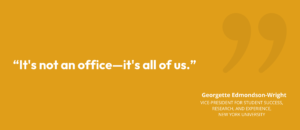
However, to create inclusive, supporting environments, and processes requires a collective approach. “It’s not an office—it’s all of us,” said Georgette Edmondson-Wright, Vice-President for Student Success, Research, and Experience at New York University during the closing panel of the US event. One of the central themes of the discussion was the balance between institutional accountability and student responsibility, but Edmondson-Wright emphasized that it is a collective effort across campus.
A culmination of three days sharing best practices for student success, the discussion focused on how higher education institutions can adapt to uncertain times. Navigating challenges that come with a changing policy environment includes dealing with funding cuts and increasing civic and federal tensions, all while still trying to move the needle on student success. The panel discussed how higher education practitioners have always been resilient—and why that is now more important than ever.
Fully supporting the mission of higher education includes equity-minded practices with the panel discussing the importance of community during such challenging times. Marisa Pagnattaro, Vice-President for Instruction and Senior Vice-Provost for Academic Planning at the University of Georgia, shared how using data to identify vulnerable students and provide engagement opportunities like first-year seminars can make significant differences to student wellbeing.
Staying the course
Although times are tough, the optimism, wisdom, and dedication shared in conference presentations and during conversations with attendees made a lasting impression on me and the of the PebblePad team who attended.
From the many breakout sessions to the closing panel, we were left in no doubt that, so long as there are leaders like those at Student Success US, higher education will continue to support future-ready graduates by keeping what—or I should say, who—is most important to our collective mission: the students.