


Search
Friday 5th December 2025

Now Live: Our Game-Changing AI-Powered Workbook Generator

Category: Articles
Gareth
by: Gareth Daley

What if you could create high-quality workbooks more efficiently, reducing workloads and development times? Product Manager Gareth Daley reveals how PebblePad’s new AI Workbook Generator makes this possible – and how the pioneering tool was created.

As a PM, the questions I ask most often are: How can we make our users’ lives easier? How can we empower our users to do their best work, faster and with less friction? Working with Toni Lavendar (CPTO) and Harrison Smith (Engineering Manager), this led us to the question:

“What if we could use AI to take an initial idea and turn it into a crafted workbook in a couple of clicks?”

So, we set out to create – and, as you’ll see, delivered – a solution that significantly speeds up workbook creation, slashes development times and massively reduces workloads, while also helping to flatten the learning curve for newcomers to PebblePad.

Crucially, one principle underpinned this ambitious plan – to protect the privacy of our users and customers to the highest possible standard because trust is at the heart of everything we do. We also wanted to give customers the flexibility to decide if, when and for whom the feature is enabled for.

“What if we could use AI to take an initial idea and turn it into a crafted workbook in a couple of clicks?” Gareth Daley, Product Manager, PebblePad Gareth Daley, Product Manager, PebblePad


From idea to prototype

Turning our vision into a reality was a collaborative effort across our product and engineering teams. We worked alongside a small group of Engineers, led by Harrison, who were passionate about working with AI to take us from our initial prototype and vision and build a robust product feature for workbook generation.

We also gained valuable input from a small group of customers, listening to their real needs and scenarios. This helped us to clearly understand what would be truly valuable to them, ensuring that our first prototype directly addressed their most important requirements.


Proven learning design

To ensure the solution is both powerful and practical, we have been training the generator on our extensive experience of creating world-class learning design. This allows the system to draw on proven design principles and best practices whenever prompted by users.

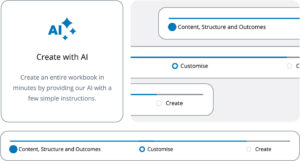
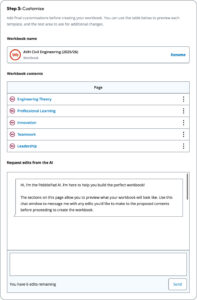
Such an approach means you can easily outline your audience and provide a simple overview of the workbook and its intended learning objectives, all via the intuitive prompt system. The AI then generates a comprehensive structure and recommends an effective content flow, empowering you to rapidly produce professional, tailored workbooks that deliver real impact.

We are particularly excited about how this new approach opens up resource creation to all levels of user, even those with little experience. Our feature enables users to quickly bring their ideas to life, providing meaningful, editable starting points and helpful suggestions. This support makes it easier to get started and explore possibilities, enabling everyone to create with greater confidence and creativity from the very beginning.
“We are particularly excited about how this new approach opens up resource creation for all levels of user, even those with little experience.” Gareth Daley, Product Manager, PebblePad

Iterating on what we had

We know from experience that the best products evolve through real-world use and honest feedback. That’s why we quickly moved to a Closed Beta, inviting more customers to put the feature through its paces. Watching how users interacted with the AI and listening to their suggestions prompted a series of important improvements. These included:

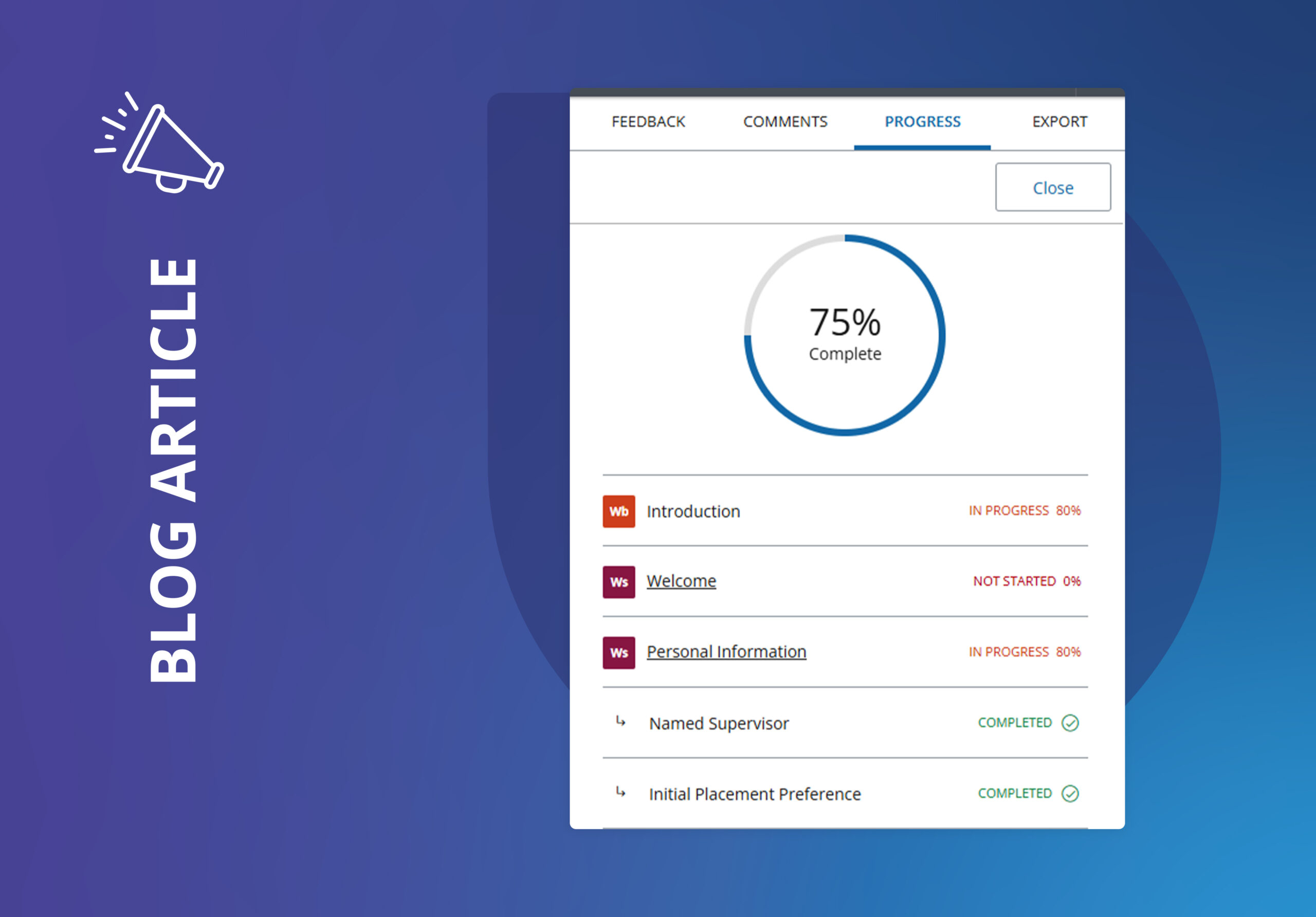
  • Introducing a preview mode, enabling users to review and amend what the AI generated before finalising their workbooks; this allows for rapid, intuitive edits, ensuring workbook designs meet individual needs in a way only AI-powered tools can deliver.
  • Refining the prompt system further, making it even simpler to get started by guiding users to specify their requirements more clearly, meaning workbooks generated by the AI are better tailored to users’ needs.
  • Enabling AI to utilise more of the Workbook Builder’s common functionality, offering a greater breadth of learning and assignment designs, so resources are more closely tailored to specific learning outcomes.
 

Delivering exceptional outcomes

These updates have made the user experience faster, smoother and simpler, leading to significant benefits:

5x faster workbook creation

Internal testing with expert users shows that creating a usable workbook is now five times quicker than before.

The findings from one of our customers during the small Closed Beta were also significant:

50% reduction in development time

Lecturers with a clear project vision can start editing immediately, which could cut typical development time by more than half.

Up to 75% workload reduction

With an instructional template provided by the university, overall workload could drop by as much as three-quarters.

50% shorter learning curve for new staff

The Beta tool could significantly accelerate onboarding, reducing the time needed to master PebblePad’s core workbook processes.

The result? Initial findings show that users can potentially create workbook resources more efficiently, saving valuable time to focus on what truly matters: teaching and learning. Importantly, the AI Workbook Generator supports our goal of democratising resource creation for everyone.


Now available to all

To understand the full potential of the feature, we know this can only be realised through wider use and more diverse feedback. That’s why we are thrilled to announce that PebblePad’s AI Workbook Generator is now available to all customers. We can’t wait for you to explore the possibilities, share your experiences and help us make it even better.

Our journey is shaped by your needs, creativity and ideas. Together, we look forward to building the next chapter, using AI as a co-creator in education.


Want to explore for yourself?

Your system administrator can enable the new AI Workbook Generator for you.

Learn more here

share
Picture of Gareth Daley
Gareth Daley

Gareth is a Senior Product Manager at PebblePad, where he leads on all aspects of integration, including LTI, API and third-party platform connections. He ensures customers have robust connectivity, enabling them to use PebblePad seamlessly within their organisation’s IT ecosystem. Gareth’s work helps institutions get maximum value from their digital learning environments by keeping interoperability, flexibility and ease of use at the heart of the product roadmap.

Latest Articles

Want to chat

If you want to talk to a team who really understands
your world, please get in touch today.

Curriculum Transformation at the University of Edinburgh: co-creation and the relationship between local innovation and institutional change

Talk description: I will use the themes of reflection and experiential learning, skills development and assessment (including programme level assessment and changes in assessment practice) to explore this process in more detail. This includes the link between disciplinary and institutional curriculum reform, learning from local innovations and changes, and using this to inform University level changes and support.

Bio: My current position is leading the University wide Curriculum Transformation Project. This is a major and long term initiative for the University considering all areas of the University’s undergraduate and taught postgraduate curriculum. Prior to this Jon set up and led the Institute for Academic Development (IAD) at the University of Edinburgh. The IAD provides University level support for teaching, learning and researcher development, including direct support for students and staff, and support for enhancement and innovation in curriculum development, the student and researcher experience. Jon has a PhD in petroleum geology.

Mission Possible: The DNA of a bespoke professional development program

Talk description: The diversity of students in higher education dictates that there cannot (and should not) be a single ‘silver bullet’ approach to address the complex challenge of career readiness learning. However, the reality of modern university structures is that delivering bespoke experiences for each student is a challenge in and of itself.  And yet, all things are possible with creative use of PebblePad to streamline delivery (for the university) and make it highly personalised (for the student). 

Bio: Gayle Brent is a Learning and Teaching Consultant (Employability) at Griffith University, Queensland, Australia. Gaye’s specialist area of interest is developing and implementing strategies to enhance staff and student understanding of employability in both curricular and extra-curricular contexts. She completed a Master of Education and Professional Studies Research to explore the potential barriers and challenges to embedding employability-based learning in higher education curriculum and is currently completing a Doctor of Philosophy exploring the impact of an extra-curricular employability program on the individual student experience.

Dr Melissa Highton. Assistant Principal, University of Edinburgh

Talk description: A journey through the stories told by wicca data. How a neglected research data set was used by students to overturn historic injustice and shed new light on the lives of women in Scotland.

Bio: Melissa has worked for many years in higher education at some of the UK’s finest and most ancient institutions. In each place she enjoys discovering the hidden histories and less heard voices which can be surfaced in new ways using the most up to date and open technologies. She is a champion of playful and curious approaches to engagement with audiences on campus and online, and is an invited speaker at events about dangerous women.

Education is an Experience That Should Be Designed

Talk description: We have any number of problems and opportunities as universities, and universities must adapt to help students from diverse backgrounds develop the knowledge and skills they need to thrive and make a positive impact in the world. Key to those adaptations is understanding that we provide students with an experience. We ought to design them with intention and purpose. This talk with take up this argument and ground it within a large educational transformation project at the University of Leeds.

Bio: Jeff Grabill is Deputy Vice Chancellor for Student Education at the University of Leeds. Prior to joining the University of Leeds, Grabill was at Michigan State University (MSU) in the United States for nearly 20 years. He served Michigan State University as the Associate Provost for Teaching, Learning, and Technology. In that role, he was responsible for facilitating innovation in learning and educator professional development via his role as Director of the Hub for Innovation in Learning and Technology. Grabill’s research focuses on how digital writing is associated with citizenship and learning. That work has been located in community contexts, in museums, and in classrooms at both the K-12 and university levels. Grabill is also a co-founder of Drawbridge, an educational technology company.

Sign Up to the Customer Newsletter