




In the recent PebblePad webinar, educators from the University of Derby, Nottingham Trent University and Swansea University showcased how they’re using PebblePad to revolutionise paramedicine education.
Their approaches – ranging from adaptive learning and reflective portfolios to AI-supported research – offer a compelling blueprint for learner-centred, authentic education that can be adapted across healthcare disciplines and into other applied fields.
1. Simulating real-world decision making
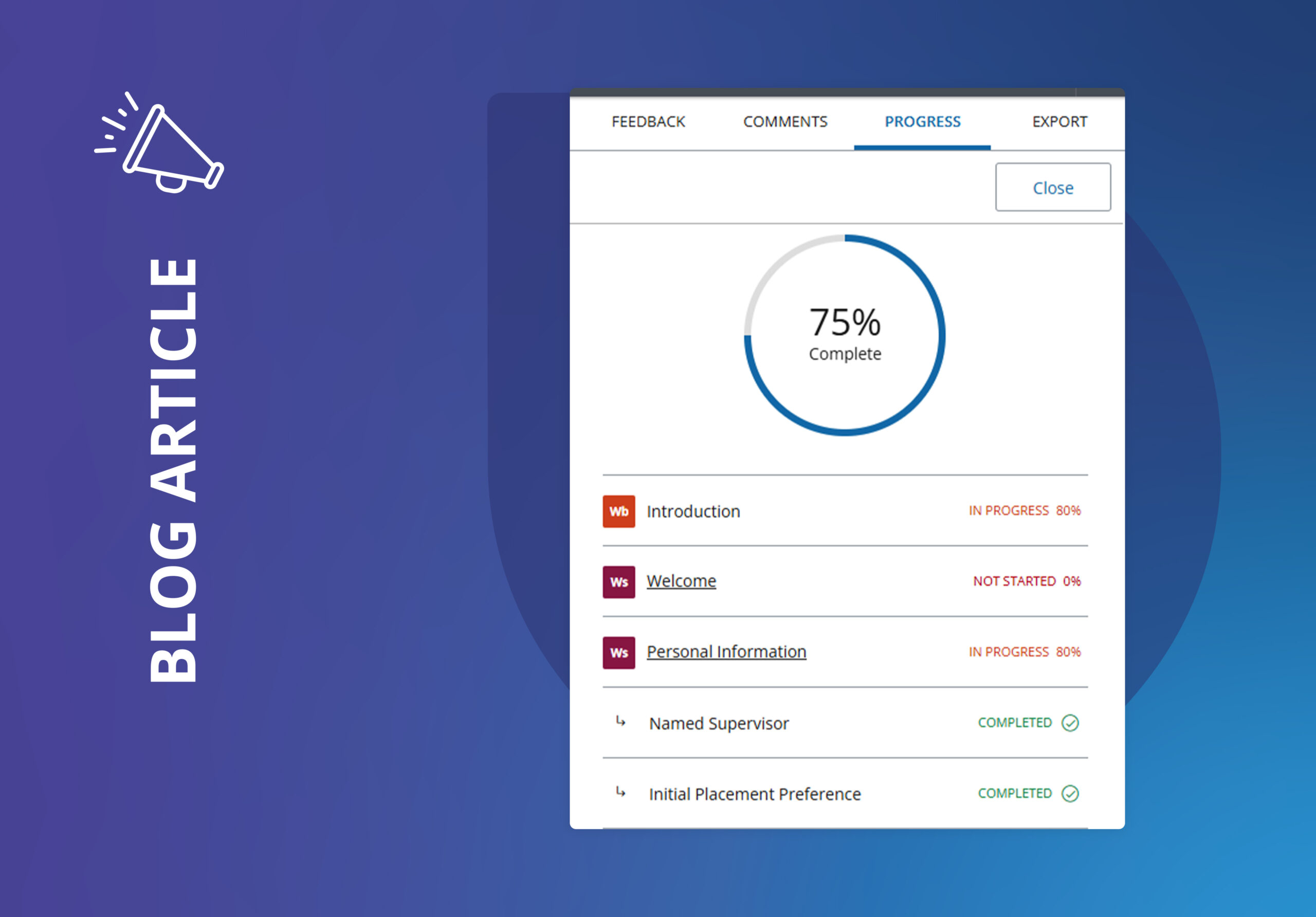
At the University of Derby, adaptive release workbooks are used to simulate the unfolding nature of clinical scenarios. Instead of presenting all case information at once, students receive updates in stages – mirroring the real-world experience of paramedics who must make decisions based on partial and evolving data.
Broader application in healthcare
The staged, scenario-based approach pioneered in paramedicine can be readily adapted to other clinical contexts where decision-making unfolds over time. In medical education, it could support diagnostic reasoning by gradually revealing patient histories, lab results and imaging. Allied health programmes – such as physiotherapy or radiography – could use similar models to simulate treatment progression or imaging interpretation under evolving conditions.
Beyond healthcare
Disciplines such as engineering, business and law could benefit from this approach as well. For instance:
- Engineering students might troubleshoot a system failure with new data released incrementally.
- Business students could analyse a market disruption as new financial data emerges.
- Law students could work through a legal case as evidence is introduced over time.
Adaptive release fosters decision-making under uncertainty and often within pressured situations. This in turn offers learners access to experiences that are vital to their growth and building confidence.
2. Embedding reflective practice and employability
Nottingham Trent University’s ambulance technician programme integrates a PebblePad ePortfolio that tracks students’ growth over a year. It emphasises non-clinical skills like reflective practice, CPD and employability. Students build personal profiles, log CPD activities, reflect on cases and develop CVs with input from NHS and private sector employers.
Broader application in healthcare
The emphasis on personal growth and employability isn’t limited to ambulance technician training – it’s a model that resonates across healthcare professions. For example, midwifery students could document antenatal and postnatal care experiences while reflecting on communication and empathy.
Occupational therapy students might track their development in client-centred care and intervention planning. In pharmacy education, students could log CPD activities and reflect on ethical decision-making in clinical placements.
Beyond healthcare
Such a reflective and employability-focused model can be adapted to support personal and professional growth in a wide range of disciplines through structured reflection and evidence of practice:
- In creative industries, ePortfolios could showcase design work, client feedback and project evolution.
- Business students might document leadership development and strategic thinking.
- Veterinary students can use ePortfolios to reflect on clinical placements, animal care procedures and ethical decision-making, while tracking competencies aligned to professional standards.
Embedding employability into the curriculum helps learners articulate their growth and readiness for the workforce – as well as setting up the successful mindset needed for continued learning throughout their careers.
3. Scaffolding research and AI literacy
Swansea University tackled the challenge of teaching evidence-based medicine to paramedic students by using PebblePad to scaffold the research process. A workbook guided students through topic selection, critical thinking and ethical use of AI tools. The result saw focus shifting from producing formulaic literature reviews to engaging deeply with the research process itself.
Broader application in healthcare
The structured approach to inquiry and ethical AI use offers a scalable framework for cultivating research skills in a range of healthcare programmes. In public health, students could explore epidemiological trends and policy impacts.
In physiotherapy or speech and language therapy, learners could critically evaluate intervention outcomes using AI-supported literature searches. Nursing students could be guided through reflective research on patient safety or care models, integrating AI tools to enhance their analysis.
Beyond healthcare
Scaffolding research, fostering critical thinking and supporting ethical AI use are all widely applicable across many disciplines. Combined, these offer a flexible framework for helping students engage more deeply with inquiry-based learning, regardless of their field of study. For instance:
- Psychology students could use similar workbooks to develop research questions, evaluate sources and reflect on methodology.
- In education, trainee teachers might explore inclusive pedagogy or curriculum design, using AI to support literature reviews.
- In environmental science, learners could analyse climate data or policy responses, guided by AI-assisted synthesis tools.
As AI becomes more embedded in academic work, teaching students how to use it ethically and critically is increasingly important across all fields.
Unlocking cross-disciplinary potential
What unites these three innovations is their emphasis on authenticity, reflection and learner agency; all three central to PebblePad’s mission to support meaningful learning. Our platform’s flexibility allows educators to design experiences that mirror real-world complexity, support personal growth and foster critical thinking.
Crucially, these strategies offer a roadmap for any discipline – healthcare or otherwise – seeking to:
- Simulate real-world scenarios
- Scaffold complex learning processes
- Embed employability and professional identity
- Integrate AI tools ethically and reflectively
Whether it’s radiography students interpreting evolving imaging data or business students navigating strategic decisions, PebblePad’s tools are designed to support meaningful, personalised learning at every stage of the learner journey.
Watch the webinar
Get more fascinating insights into how PebblePad is transforming paramedicine education – and beyond – by watching the on-demand webinar here.